Rethinking Food Security Through Local Knowledge for Climate Justice
- Communication .
- 1 day ago
- 4 min read

Over half of Karnataka’s population depends on agriculture, and more than 80% of the farmland is rain-fed. Yet as climate change brings erratic rainfall and declining soil fertility, many small farmers, especially women, face mounting precarity. The Oxfam Report (2023) shows that people in the bottom 30% of the population in rural and urban areas still spend 66% and 60% of their total expenditure on food, respectively. This means that food insecurity is not only a rural problem, but a structural one that is shaped by economic inequality, gendered labour, and ecological degradation.
When we think of food security, the conversation often defaults to large-scale agriculture, industrial farming, or global supply chains. These methods often commodify food production. Yet this narrow lens misses something vital: the knowledge, labour, and innovation at the community level who are cultivating sustainable food systems every day.
The 2016 IPES-Food draws attention to how there’s a cultural erosion due to loss of native seed varieties and local knowledge, thereby highlighting the need for local knowledge and intervention for food security. For instance, kitchen gardens improve nutrition, reduce dependency on volatile markets, and protect biodiversity (FAO, 2019). Across villages in Karnataka and beyond, women tend to kitchen gardens, preserve seeds, and nurture crop diversity. These may appear to be small household practices, but they are in fact critical to climate resilience and food sovereignty. These practices embody a relational way of growing food, one that ties land, water, community, and care. This is what Buzz’s intervention nurtures.
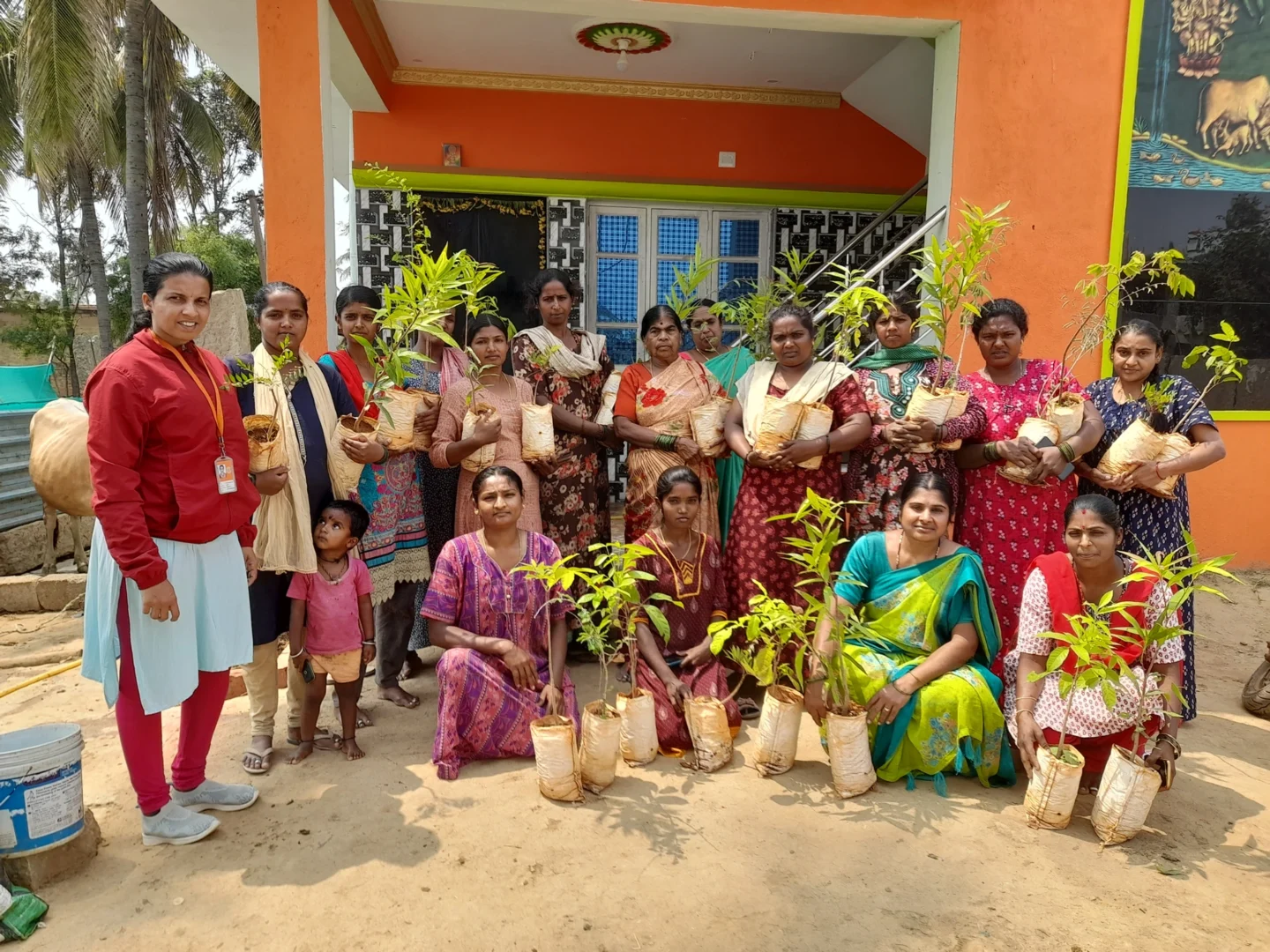
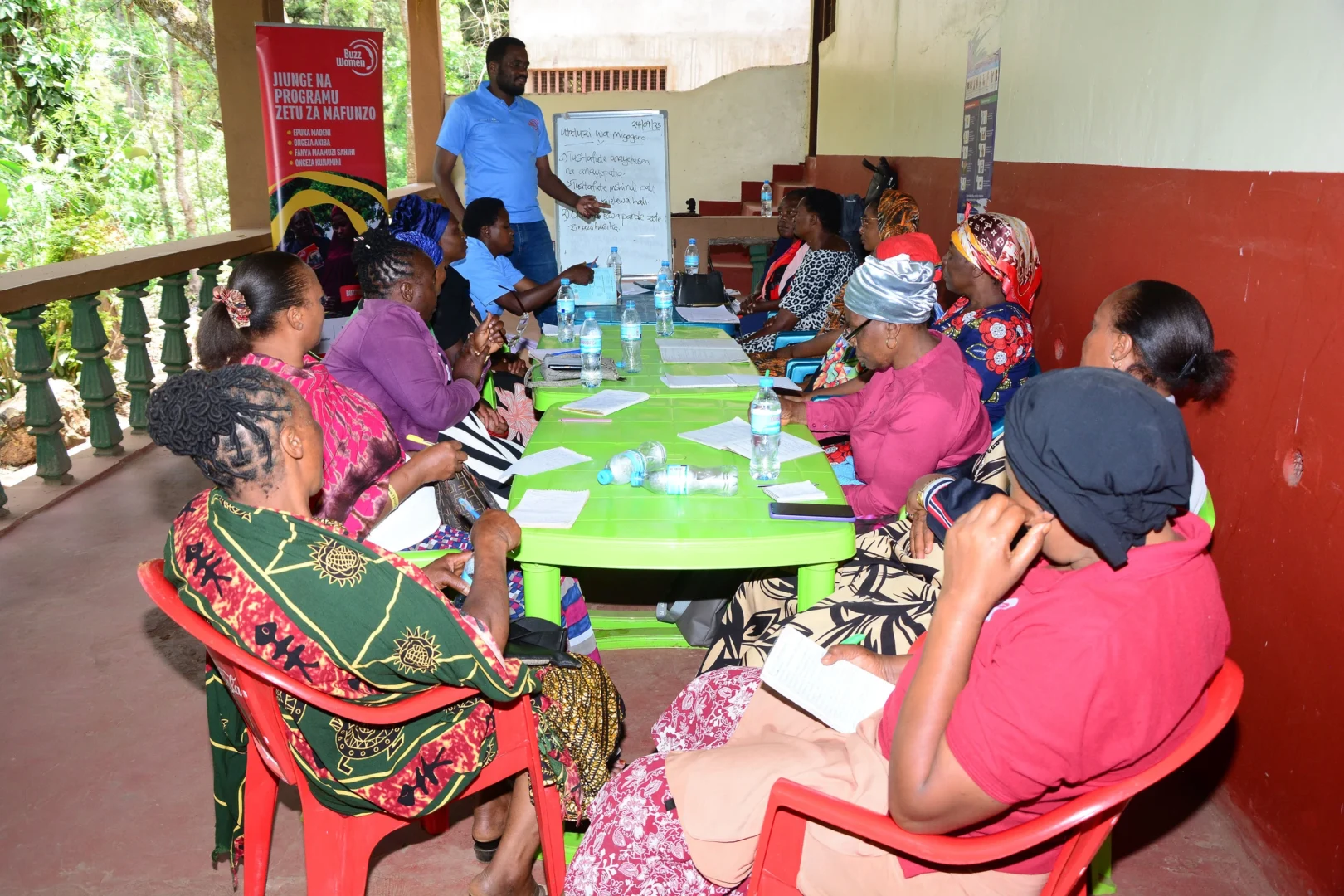
Buzz Women’s doorstep learning model challenges the idea that solutions must come from outside communities. Through the Buzz Green program, women across rural Karnataka explore how their household-level choices like what they grow, cook, and consume, can ripple outward to build collective climate resilience. They learn how to grow kitchen gardens, compost organic waste, save indigenous seeds, and practice water conservation.Â
A study conducted by Zero2Positive in 2024-25, found that the Buzz kitchen garden initiative enhances biodiversity and food security by reducing dependence on external markets and strengthening resilience to inflation and supply disruptions. Women report better nutrition and health, with many achieving economic empowerment through reduced food expenses and income from surplus sales. These gardens have catalysed community-wide ecosystem restoration including reforestation, biodiversity renewal, and water conservation while amplifying women’s decision-making power. The initiative has enabled a 46.8TCO2e which is the total amount of greenhouse gas emissions either sequestered (absorbed) or avoided by having kitchen gardens.Â
What do these kitchen gardens look like? What do they do immediately for communities?Â
In Kolar district, Saraswathi, an Anganwadi teacher, transformed a small patch of land into a thriving kitchen garden after her Buzz Green training. The vegetables she grows now feed children in her Anganwadi and her family, saving money, improving nutrition, and inspiring other women in her village to start their own gardens. Similarly, Vijayalakshmi, once a nurse, applied the same training to start a desi poultry farm (indigenous or native breeds of chickens that are traditionally raised in rural areas of India; these breeds are typically well-adapted to local environmental conditions, requiring minimal care and low-cost feeding practices) and a kitchen garden. Her initiative now supports her family’s income and provides nutritious, chemical-free food for her community. These examples show how women’s leadership in food systems often begins at home but extends far beyond it.Â
In another Kolar village, Tasina used the skills she gained from Buzz Green to create a water-efficient, organic garden and later trained over 30 other women to do the same. Through shared learning and cooperation, these women are cultivating both food and solidarity, thereby redefining food security as a community-driven process rather than a top-down policy target.
Such stories illustrate that food security and climate action are not only about increasing yields or deploying new technologies. They are about reimagining the social and ecological systems that sustain life. Practices like composting, seed-saving, and kitchen gardening might appear small-scale, but collectively, they build the foundation for a more resilient and regenerative future.
Industrial agriculture often measures success in yields and profit margins. But community-led practices measure success differently – in nourishment, autonomy, and ecological balance. Indigenous seeds, for instance, have natural pest and disease resistance and adapt better to local conditions of water, wind, and sunlight (Centre for Excellence in Sustainable Tribal Development, 2020). Saving and sharing these seeds enables farmers to be self-sufficient, safeguard biodiversity and leaving a more carbon positive footprint for future generations.
These practices redefine food not as a commodity, but as a relationship between people, land, and life. They challenge the structural inequalities that place women at the margins of agriculture while positioning them as central actors in climate resilience (Udumann et. all, 2024). When women like Saraswathi grow vegetables for their Anganwadi, when Vijayalakshmi raises desi chickens, or when Tasina trains 30 others to garden organically, they are reimagining what a just, resilient food system looks like.